
In the quiet town of Aguta, surrounded by palm trees and red dusty roads, lived a young girl named Ninkchi. Her family was deeply religious. Her father, Elder Anayo, was a church deacon, and her mother, Mama Ai, was the women’s leader. Their home was full of strict rules. Every day started with prayer and every night ended with Bible reading.
Nikichi had no freedom to make her own choices. She was the only daughter. She was beautiful and smart, but she had a problem. The man she loved and wanted to marry was not loved by her parents. His name was Oduma. Oduma was not gentle. He was rough and stubborn. His parents were known in the town for always fighting.
If they shouted at each other in the morning, they would be laughing together by night. If his father served his mother divorce later today and throws her out of the house, they’ll be back together again by tomorrow. Peace never lasted 24 hours in their house. People in Oguta avoided them. And because of that, they avoided Oduma, too.
But Niki didn’t care. She liked Oduma. He made her feel seen and heard. He was bold and he didn’t hide his feelings. She felt free when she was with him. She was drawn to Oduma like a moth to flame. He was loud, fearless, and fiercely loyal, the opposite of everything she knew at home. One day, she made a bold move.
She brought Oduma to her house. The sky was clear, the birds were singing. But the moment Elder Anay opened the door and saw Oduma, the wind changed. “What is he doing here?” he shouted. His voice shook the windows. “That boy from that house over my dead body.” Nichchi stood frozen. Oduma looked down.
Mama Eber tried to calm her husband. “Let the boy speak first,” she said gently. But Elder Anayo shouted again, “A child raised in fire cannot give you peace.” Oduma walked away that day. Ninkchi ran after him. “Don’t listen to them,” she cried. He turned and touched her face. “I won’t let go. Not now.” And from that moment, Ninkichi made a silent vow.
If the world was against them, she would still choose him, even if it cost her everything. One morning, Nikuchi walked into the parlor with a letter in her hand. Her eyes were red like ripe tomatoes. Her voice was soft like morning breeze. “Mama, papa, I got admission,” she said. Elder Anna jumped up. “Praise the Lord.
” Mama Eber knelt down and lifted her hands. God has done it. My daughter will become a graduate. There was no party, only prayers. They didn’t have much, but they gave her everything they could. Her father brought out his savings. Her mother packed rice, beans, and soap into a small bag. They held her hands and prayed till their voices broke.
“Go and make us proud,” her mother whispered, holding her tight. Don’t forget who you are,” her father added, placing a Bible in her hands. Nikchi nodded. Her face was calm, but her heart was like a drum in the rain. That same evening, after the hugs and tears, Nichi left the house, but she didn’t go to any university.
She didn’t go to any city filled with books and lectures. She ran to Oduma, and they both fled the town. Far away from Oguta, they found a small town. A town where no one knew their names. Oduma had a friend who gave them one small room with broken walls and one old mattress on the floor. The room was hot like pepper soup in the afternoon.
The fan made noise like a crying baby. The window had no cotton, just a piece of wrapper hanging on a nail. But Nanki smiled because she was with him. Every morning they woke up hungry but happy. Every night they held hands and promised each other things they could not afford. Don’t worry, Oduma would say.
I will find a job. I will buy you everything. Nichi would nod. I believe you. But the truth sat in the corner like a silent visitor. There was no job. There was no money. Oduma walked the streets every day looking for work. He came home with dust on his face and sadness in his eyes.
Niki sold little things, ground nuts, cold water, sometimes even secondhand clothes on weekends, but it was never enough. They started eating once a day. Sometimes they went to bed with only water in their stomachs. Still she stayed because in her heart she had chosen him and she believed that love would be enough. But love alone cannot boil yam and very soon something else began to grow in Nkichi’s body.
Something that would change everything. It started one morning. The sky was gray. The room was quiet. Niki rushed outside and knelt by the gutter. She held her stomach and vomited again and again like her body was rejecting something it didn’t ask for. She wiped her mouth and sat on the cold ground. Her hands were shaking.
Deep inside, she knew what it was. She went to a small clinic in town. The nurse smiled after the test and said, “Congratulations.” Nanki did not smile back. She walked home slowly, her slippers dragging in the dust, her heartbeat fast like the drum during a village dance. She opened the door and saw Oduma lying on the bed fanning himself. I’m pregnant, she said.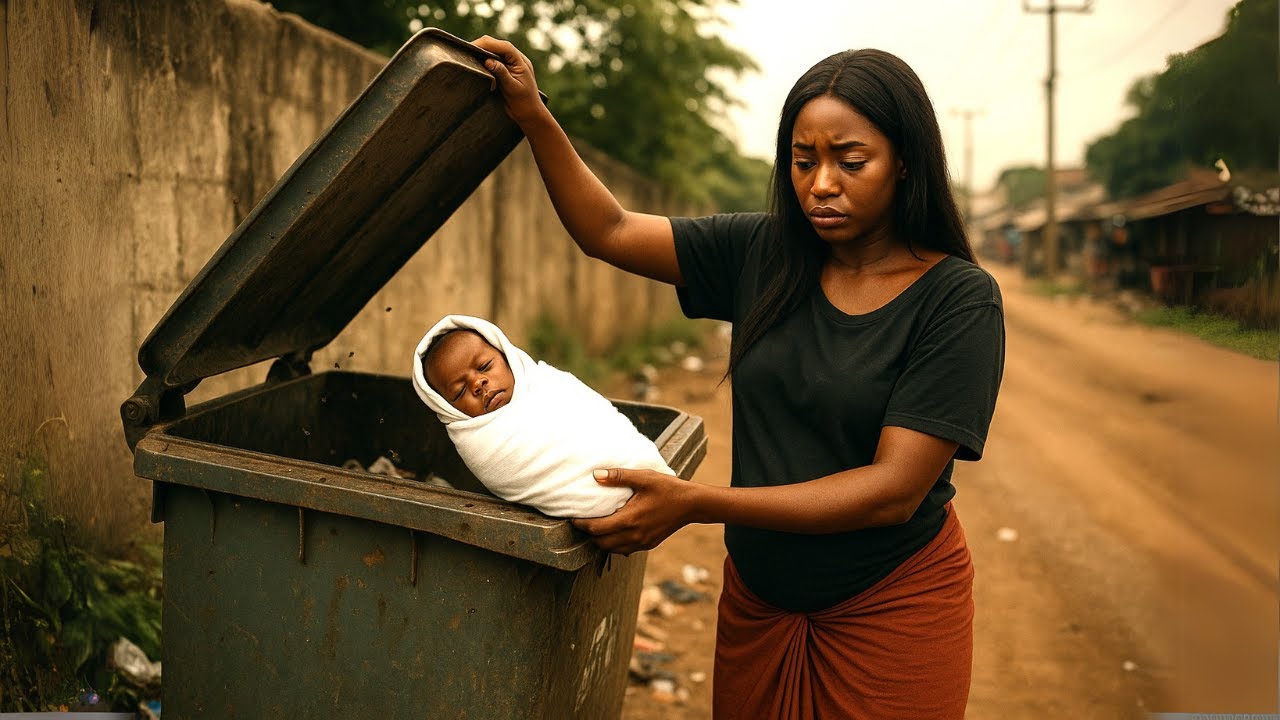
Oduma sat up. His smile disappeared. Pregnant? He asked. “How are you sure?” She nodded. He looked at the wall, then at the floor, then at her. He rubbed his head. “No job, no money.” “How can I be a father now?” he said. “This is too much.” That night, while the moon watched through the torn window, Unichi was fast asleep when Oduma packed his clothes quietly.
One shirt, one trouser, one bag. He looked at her one last time and whispered, “I can’t do this.” Then he left, running away. By morning, his shoes were gone. His voice was gone. The bed was cold. Nichchi sat in the corner hugging her knees. She didn’t cry loudly. Her tears just rolled one by one like a broken tap.
“I was warned,” she whispered. Her friends came later that day. They listen. They sighed. One of them said, “Forget that boy. He’s not worth your tears.” Another one said, “A baby will slow you down. You’re still young. Just remove it and move on.” Nikkichi shook her head. “Number, I can’t do that. In my family, it’s taboo.
” They laughed. “Who will know? We’ve done it before. It’s nothing. For two days, they begged her. Then on the third day, one of them brought a small packet. “Take this. Drink it. You’ll be fine,” she said. Nichchi looked at the drug, then at her empty room, then at her empty heart, and she took it.
That night, her stomach twisted like a rope. She bled, she cried, she slept on the floor. By morning, the baby was gone. She looked at the blood, touched her belly, and whispered, “I’m sorry.” The room was quiet again. Oduma was still gone, but something inside her had changed. Something had died, and something dark had just been born.
After the baby left her body, Ninkchi did not cry again. Her eyes dried like cracked ground after her matan. Her friends cleaned her face, dressed her up, and gave her back her smile. Only this time, it was a different kind of smile. They said, “Enough of this crying. Let’s show you how to enjoy life.” They gave her a red dress. It was short, too short.
It clung to her like a second skin. They painted her lips red. Gave her heels that clicked like horse hooves on cement. That night they took her to a bar. The place smelled of smoke and perfume. Music filled the air like sweet poison. Men laughed loudly. Glasses clinkedked. Eyes stared. A man in a big car called her.
You’re beautiful, he said, pressing money into her palm. Come sit with me. She sat. She laughed. She danced. That night felt powerful. the kind of power that comes with attention. She looked in the mirror and saw someone else. Not the church girl, not the crying girl, but a girl who could get what she wanted. Soon the rich men lined up like goats waiting for water.
They called her baby sweetie princess. They bought her phones, shoes, clothes. They didn’t ask questions and she didn’t tell lies. Each man thought he was special, but Nichi had learned something. Feelings don’t feed you. Money does. She played her game well. And then another pregnancy came, but she didn’t panic. She laughed.
She called her friend. They brought the drug. Gone. Then another came. Gone again. Then the third. Gone. Fourth. Gone. Each one left quietly. No cradle. No name, no tears. Only the rapper she used to clean herself and the bitter tea she drank after. Her body became a graveyard no one talked about. But outside she danced. She wore gold. She smiled wide.
People said that girl is living her best life. But her heart knew the truth. She was not clean. She was not free. She was just floating like a feather with no wind. Time passed and one day it happened again. She got pregnant for the seventh time, but this time it refused to leave. Niki took the pills.
Nothing happened. She took another. Still the baby stayed like a stubborn yam that refused to boil. She went to another clinic. The nurse frowned and said, “You’re too far gone. This one, you must carry it. Removing it may damage your womb.” Nonetchi was shocked to hear this. She thought of many things. She wasn’t ready to be a mother yet.
But here’s one stubborn pregnancy that won’t go. And so, for the first time, Nanki walked through nine long months with a baby in her belly. She carried the pregnancy. Her belly grew. Her body changed. Her feet swelled. But her heart stayed the same. Cold and dry. No joy, no singing, no baby shopping, just silence. She told no one.
She covered her stomach with big clothes and tight wrappers. When people asked, she laughed it off. It’s just wait, she’d say. But deep inside, she knew. This child was coming. And when the day came, it was in the evening. No one around. Just her and her pain. She screamed into her pillow. She bit her lip.
She cried without tears. The baby came. A boy. Tiny fingers, warm skin, eyes like hers. But when she looked at him, she felt nothing. No joy, no fear, no love, just emptiness. She sat on the floor holding him. Hours passed. The baby cried softly like he knew something was wrong. Then Ninkichi came up with a plan. She would take the baby to any man and force it on them.
This is because she has been with a lot of men and couldn’t quite figure out whose child the baby is. So the morning she took him to the first man. This is your child, she said. He laughed. Are you mad? I’ve never touched you without protection. The second man said, “Thief, get away from here.” The third called police. By the third day, Niki was tired.
The baby cried and cried. She looked at him and whispered, “I don’t know what to do with you.” That evening, she wrapped him in a white cloth. She walked far, past the shops, past the market, past the park until she reached a big black bin by the corner of an old fence. It was full of dirt. Flies danced on top.
The air smelled like death. She looked around. No one was watching. Then she lifted the lid. She looked at the baby one last time. He blinked. Then boom. She dropped him in, closed the lid, and ran away. She didn’t look back. She didn’t say a word. She went home, washed her face, and told herself, “It’s over.
” And from that day she never spoke of it again. When her friends came to ask, Netchi smiled and lied. He finally agreed to take the baby. She said he came back. He took him. They hugged her. You see, we told you men always come around. She nodded. But inside her chest, her heart was heavy like a bag of wet sand. She cleaned her face, wore makeup, put on her heels.
She followed them to the bar that night. The music played loud. The lights blinked. Men bought drinks. Laughter filled the room. She danced. She laughed. But inside it was quiet. Very quiet. The laughter didn’t reach her bones. The drinks didn’t sweet her tongue. The compliments didn’t melt her like before. She smiled, but it was the kind of smile that doesn’t touch the eyes. Her friends didn’t notice.
They kept saying, “Nichi, you look hotter than ever.” She would nod. But every night when she removed her dress and wiped her makeup, she sat alone on the bed and stared at the ceiling. She heard a baby cry in her mind, even when there was no baby around. Sometimes she would sit and feel like someone was watching her, like two small eyes from a dark bin was still following her.
She shook her head and whispered, “Stop it. It’s over.” But it didn’t stop. It stayed like a shadow behind her laughter, like a stain under clean cloth. The days moved. She went back to the life she knew. sugar daddies, bars, fast money. But it didn’t taste sweet anymore. It felt like chewing dry leaf. She started getting tired, very tired.
Not the kind of tired sleep could fix. The kind of tired that came from the soul. And one day, as she sat on a plastic chair watching other girls laugh and dance, she whispered to herself, “Is this all there is?” But no one answered. Only silence sat beside her. Naggeti was tired. Tired of lies. Tired of bars. Tired of men who never stayed past morning.
She told herself, “Maybe it’s time to be normal.” That’s when she met Echa. He wasn’t rich. He didn’t drive a big car, but he had something different. Peace. Emma was a teacher. His voice was soft like wind through cassava leaves. He spoke gently, walked slowly, smiled easily. He didn’t look at her body. He looked at her eyes.
“Marry me,” he said one evening. She blinked. “Me?” “Yes,” he said. “You’re the kind of woman I’ve been praying for.” Her heart skipped. No man had ever prayed for her before. So they got married in a small church, just a few people, a white dress, a little rice, no noise, no lies. For the first time in years, Nichchi felt like a wife.
She cooked, she cleaned, she waited at the door when he came home. At night, he touched her gently, held her like she would break. She thought maybe, just maybe, her past had stayed in the past. But after one year, no child came. 2 years, still empty. People started whispering. Is she a woman or a log of wood? She looks healthy, but nothing is moving inside her.
Emma’s mother came to visit one day. She stayed for a week. On the seventh night, she told Ema, “That girl, she’s hiding something.” Emaika didn’t say anything, but his eyes started changing. His smile grew thinner. He came home later, slept with his back turned. In case she noticed, she tried cooking his favorite soup, wore his best rapper, sat beside him, and rubbed his feet, but his eyes were far.
Then one morning, he folded his clothes into a bag slowly, neatly. She stood by the door, holding her wrapper tight. “You’re leaving?” she asked. He nodded. “I can’t wait forever.” She said nothing. He looked at her one last time and whispered, “I’m sorry.” Then he walked out. Just like that, another home gone, another heart broke.
And Netchi stood alone again with no child, no husband, no answers, just silence. After Ema left, Niki said to herself, “Maybe love is not for me. Maybe I just need comfort.” Then she met Uchi. He was tall, smooth, and rich. His perfume arrived before him. His laughter shook the ground like thunder. And when he smiled, you would think life had no problems.
He saw her at a wedding and said, “You are too beautiful to sit alone.” Ninketchi smiled. That old smile, the one she had buried, rose again. Ucha didn’t waste time. The next week, he brought gifts, shoes, perfume, phones, gold. He didn’t ask her too many questions. He just said, “I want you. I’ll take care of you.
” She said yes. They had a big wedding. White tents, loud music, people came from far. Her dress shined like morning dew. She looked like a queen. But after the wedding, the house became cold. Days turned to months. No child. She went to the hospital. The doctor said everything was fine.
But nothing was happening inside her. She started boiling herbs, drinking bitter roots, fasting, crying in the bathroom, kneeling by the bed at midnight. Nothing. Then Uch’s mother came to visit. She looked Nichchi up and down. The next day, she called to the kitchen. That girl is hiding something. She must have tied her womb.
Maybe she has eaten strange things. The day after she shouted across the house, “What kind of woman can’t carry a child? You want to bury our family name?” Uch started changing. His voice became sharp. His hands too, his eyes turned cold. “Tell me the truth,” he said one night. “Have you removed children before?” Then Kchi looked at him, her lips shaking.
“No,” she lied. He hissed. then you must be cursed. And that was the beginning of the end. One morning, Uchi packed her bags himself. I don’t want you again, he said. Leave. She didn’t argue. She picked her bag, walked out the gate. The security guard watched her go. The wind carried dust behind her.
Another home lost. Another name erased. Another door closed. And still her stomach was empty. After Uch chased her out, Ninkchi didn’t cry. She just walked. Dust covered her feet. Her eyes were blank. Her body moved, but her spirit sat somewhere far behind. She went back to her small room, the one with the noisy fan and the broken chair.
She cleaned it, lit a candle, and sat in the dark. That Sunday, she wore white and went to church. She didn’t sing. She didn’t dance. She just knelt and stared at the altar. After service, the pastor called her. My daughter, he said, “The Lord is showing me something.” She looked at him. “There’s something you’ve buried, something deep, something you must confess.” She forced a smile.
“Me? I’ve done nothing, sir.” The pastor’s eyes narrowed. Don’t lie to God. Go and speak the truth or it will keep chasing you. Nichi stood up slowly. I don’t know what you’re talking about, she whispered. She walked away before he could speak again. Back in her room, she sat on the bed. She thought about the baby in the bin.
She thought about the six others she never named. She thought about Oduma, about Uchi. But she said nothing. She didn’t write. She didn’t pray. She didn’t tell. Her heart was locked like a metal gate. She told herself, “It’s too late. Nobody will understand.” So, she wore her pain like makeup, covered her past with perfume, sat in the front row at church, and clapped like everyone else.
But every time the pastor said, “Mercy is waiting,” her chest would tighten. She would swallow hard and pretend because her shame was louder than her voice. And even though the truth kept knocking, Netchi kept the door shut. Then came Cojo, tall like a palm tree, skin smooth like ripe banana, voice deep like a village drum. He drove a black car that homeed like a satisfied lion. His clothes were neat.
His smile was calm. His hands looked like they had never carried pain. Cojo was not like Oduma, not like a not like Uchi. He was different. He asked her, “What do you do?” She smiled and lied. I’m a graduate. I studied business administration. He smiled back. You’re just the kind of woman I’ve been praying for.
She laughed gently, but deep inside her chest, her heart whispered, “Don’t lie again.” She ignored it. They started spending time together. He took her to fancy places, bought her gifts, listened when she spoke. He didn’t rush her. He didn’t touch her without asking. Kojo had class. Kojo had peace. And for the first time, Ninkchi felt like maybe, just maybe, she could breathe again.
She hid everything. No mention of Oduma, no whisper of Emma or Uchi, no trace of the baby she dropped in the bin. She buried it all like a seed she never wanted to grow. One day he said, “I want to meet your parents.” Her heart jumped, but she said, “Yes.” She took him home to Aguta. Elder Anayo saw him and his eyes widened. This one has sense.
Mama Eel couldn’t stop smiling. My daughter has brought us joy again. They prayed. They sang. They danced. And when Cojo knelt down and asked, “Will you marry me?” Nichchi looked at her parents, looked at the man in front of her and said, “Yes.” The wedding date was picked. The cards were printed. The dresses were sewn.
And for the first time in her life, Ninkichi looked in the mirror and said, “Maybe God has forgiven me. Maybe this one will last.” She was happy, but the past does not die. It only sleeps. And the day it wakes, it doesn’t knock. The sky was bright that morning. Birds sang. The wind was soft.
Nichi wore a yellow dress. Her smile stretched wide like river water under sun. It was the day she would meet Kojo’s family. He held her hand as they walked to the house. Don’t be shy, he said. They’ll love you. She nodded, but her heartbeat fast like a drum warning a village. The house was big. The gate was painted gold. The compound was neat like church floor on Sunday morning. They knocked.
A maid opened the door. Then came Kojo’s mother. She stepped into the light, wiping her wet hands on her wrapper. The moment her eyes landed on Inkichi. She froze. Her lips parted. Her eyes widened. She stepped back slowly like she had seen a ghost. “Is it not you?” she asked. Inki blinked, “Ma!” The woman didn’t answer her.
She turned and shouted into the house, “Davis, come out.” A sound came from the hallway. Light footsteps. Then a boy appeared. He looked about 10. He wore a blue t-shirt and brown shorts. His eyes were big. His nose was sharp. His lips soft like hers. And when he stepped into the light, Miki saw it, her face on his.
The boy looked at her, quiet, still, curious. Her knees went weak. Her lips trembled. Her hands began to shake. Kojo looked at his mother, confused. “Mom, what is this?” But she didn’t answer him. She looked at Nanki, her voice sharp like a cutless. Do you remember what you did 10 years ago? Do you remember throwing a baby into a bin like trash? Netchi’s breath caught in her throat.
Her world turned silent. The ground beneath her felt like water. She wanted to speak, but her mouth stayed open with no words coming out. She looked at the boy again. He was still staring, still silent. But deep inside her, something cracked. and she knew she had been found. The room was quiet, too quiet. Kojjo’s mother stood tall, her eyes burning holes into Ninkichi’s skin.
She pointed again. Do you remember the baby in the bin? Ninki’s legs failed her. She dropped to her knees like a sack of yam hitting the floor. Her hands trembled. Her mouth opened, but no words came at first. Then her voice cracked like old wood. “Yes,” she whispered. “Yes, it was me.” Her eyes flooded.
Her chest rose and fell like angry waves. “I was young. I was scared. I had no one. I didn’t know he would survive. I didn’t think.” She broke off, sobbing. Kojo took a step back. His face turned pale. The boy Davis stood by the door, still quiet, still staring. Then it poured everything. She told them about Oduma, about running away, about the lies, about the abortions, about the night she walked across town, opened that bin, and dropped her child inside like he was nothing.
“I thought no one saw me,” she said. “I thought it was over.” Cot’s eyes were white. His lips didn’t move. His mother crossed her arms. Her voice was firm. You cannot marry my son. You are not the kind of woman we want in our family. Inchi cried harder. Please, I accept. I know I’m not worthy, but let me have my child back. Let me hold him.
Let him call me mama just once. The woman shook her head slowly. No. She looked at the boy. He is mine. I raised him. I fed him. I cleaned his tears. He calls me mommy. You lost that right 10 years ago. But I gave birth to him, Nikichi whispered, her voice shaking like a wet leaf in the wind. “And you threw him away,” the woman said sharply.
“You did not lose him. You threw him.” Silence fell again. Kojo turned around and walked out of the room. The boy followed him. The door closed and Nanki, still on her knees, was left alone with her tears. Everything she buried had returned, and it had taken everything with it. Her parents had come.
They were sitting quietly in a corner when everything spilled. They heard every word. Elder Anna sat like stone. His Bible rested on his lap, but his hands did not move. His face was dry, but his eyes were empty. Mama Ibra was weeping. “Not soft tears, heavy ones, the kind that come from a broken soul.” “My only daughter,” she cried.
“My only daughter.” Ninkchi turned to them. Her lips shook. “Mama, papa, I’m sorry.” Elder Anayo didn’t look at her. He turned his face to the wall. His jaw was tight. “You lied to us,” he said slowly. “You lied for years.” She crawled on her knees toward him. “Please, I was scared. I didn’t want to bring shame.
You have brought it now,” he said sharply. Then came the words that broke her spirit. “Don’t come home again.” Netchi froze. “Papa,” he stood up. We raised you with the word of God. We gave you everything we had and you repayed us with lies. Mama reached for him. Please, she’s still our child. But Elder Anay raised his hand. Not anymore.
He walked out of the house. Mama Ebre knelled beside Ninkichi and held her for a moment. You should have told me, she whispered. You should have told me everything. In Kichi couldn’t speak. Mama Eber kissed her forehead, then stood up and followed her husband. That night, the streets were quiet. The wind blew dust into her eyes.
Her rapper flapped against her legs. Nichchi walked with no direction, no husband, no son, no father’s home to run to. The street lights blinked. The sky was black. Her shadow followed her long and lonely and for the first time in her life. She had no one. After everything was gone, Nikkichi broke. Then she bent.
Then slowly, like a seed in the dark, she began to change. From that day on, Nikichi gave her life to God truly. She joined a local church, not as a member, but as a servant. She cleaned the compound, arranged the chairs, and wiped the floors. She fasted often, and prayed for mercy. She came early.
She stayed late. She washed toilets, carried chairs, swept the altar. She fasted till her lips turned pale. She prayed till her knees became dark like charcoal. Every time the pastor said, “Mercy,” her eyes would close tight. Her hands would rise. People pointed at her, “Is that not the girl who dumped a baby?” Look at her.
Holy, holy, after sinning, she heard it all. But she didn’t talk back. She just cried and served. She did not know if she would ever find peace again, but she made up her mind. If she had nothing else, she would use the rest of her life to seek God’s forgiveness. Moral lesson. You can run from people, but not from your past. Choices have consequences, and the truth always finds its way back.
But even in shame, there is still a road to mercy if the heart truly turns to God. I hope you enjoyed the story. If so, please like the video. Comment what you learned from the tale and don’t forget to subscribe to the channel for more enchanting tales just like this one. Thank you.


0 Comments:
Post a Comment